barscaret-downcaret-leftcaret-rightcaret-upcheckchevron-leftchevron-rightfile-pdfinfoinfo-circlesign-in-altsignin text-widthtimesyoutube

iOS > Device Data & Configuration

Customize the home screen dock on the iPhone or iPad with custom configuration profiles

Updated on March 4th, 2026

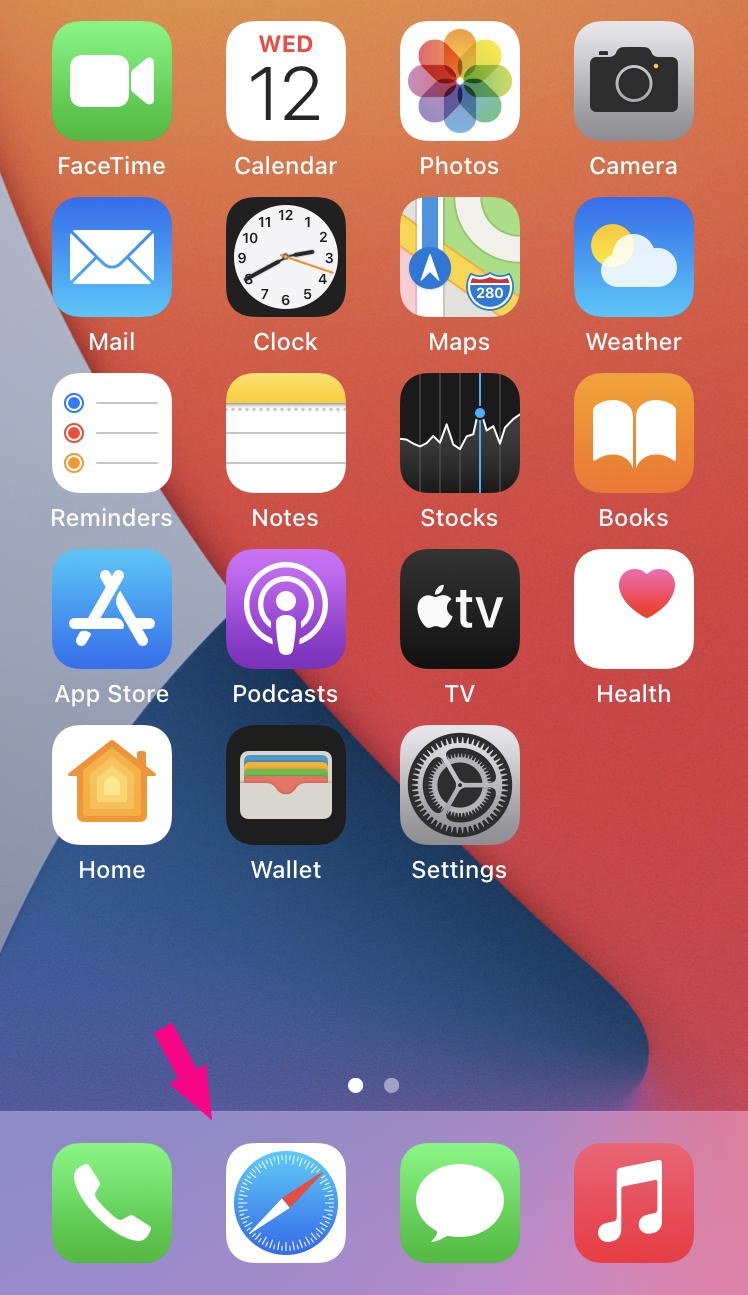
The home screen and dock of an iPhone or iPad can be customized using Miradore.

Miradore makes it possible to create custom configurations for your iOS device's home screen, including remotely adding or removing applications from the dock. For general information on custom configuration profiles for iOS devices, see Custom configuration profiles for iOS devices.

Requirements

Adding an application to the home screen dock using a custom configuration profile

Prerequisites

A configuration payload is needed to create the custom configuration profile. The payload can be created as a .mobileconfig file using any code editor and uploaded to Miradore, or you can paste the payload into the text box during the configuration profile creation. In this article, we utilize an example payload that adds the Microsoft Outlook app to the dock with iOS's Messages and Camera apps present on the home screen. For more information on the HomeScreenLayout payload, see Apple's documentation.

Steps for creating the custom configuration profile

  1. In Miradore, navigate to Management > Configuration profiles and select Add.
  2. In the Add configuration profile wizard, select iOS, then select Next.
  3. Select Advanced (custom), then select Next.
  4. Upload a .mobileconfig file containing the payload by selecting Browse or paste the payload into the Custom configuration text box, then select Next.
    Example payload:

    <?xml version="1.0" encoding="UTF-8"?>
    <!DOCTYPE plist PUBLIC "-//Apple//DTD PLIST 1.0//EN" "http://www.apple.com/DTDs/PropertyList-1.0.dtd">
    <plist version="1.0">
    <dict>
        <key>PayloadContent</key>
        <array>
            <dict>
                <key>Dock</key>
                <array>
                    <dict>
                        <key>Type</key>
                        <string>Application</string>
                        <key>BundleID</key>
                        <string>com.microsoft.Office.Outlook</string>
                    </dict>
                </array>
                <key>Pages</key>
                <array>
                    <array>
                        <dict>
                            <key>Type</key>
                            <string>Application</string>
                            <key>BundleID</key>
                            <string>com.apple.MobileSMS</string>
                        </dict>
                        <dict>
                            <key>Type</key>
                            <string>Application</string>
                            <key>BundleID</key>
                            <string>com.apple.camera</string>
                        </dict>
                    </array>
                </array>
                <key>PayloadIdentifier</key>
                <string>com.example.myhomescreenlayoutpayload</string>
                <key>PayloadType</key>
                <string>com.apple.homescreenlayout</string>
                <key>PayloadUUID</key>
                <string>f0b2d13e-a985-4264-9901-707feabddfcd</string>
                <key>PayloadVersion</key>
                <integer>1</integer>
            </dict>
        </array>
        <key>PayloadDisplayName</key>
        <string>Home Screen Layout</string>
        <key>PayloadIdentifier</key>
        <string>com.example.myprofile</string>
        <key>PayloadType</key>
        <string>Configuration</string>
        <key>PayloadUUID</key>
        <string>24c41ae0-f8a9-4d9f-a007-d67b0dc15af4</string>
        <key>PayloadVersion</key>
        <integer>1</integer>
    </dict>
    </plist>
    

    Miradore - add outlook to dock ios
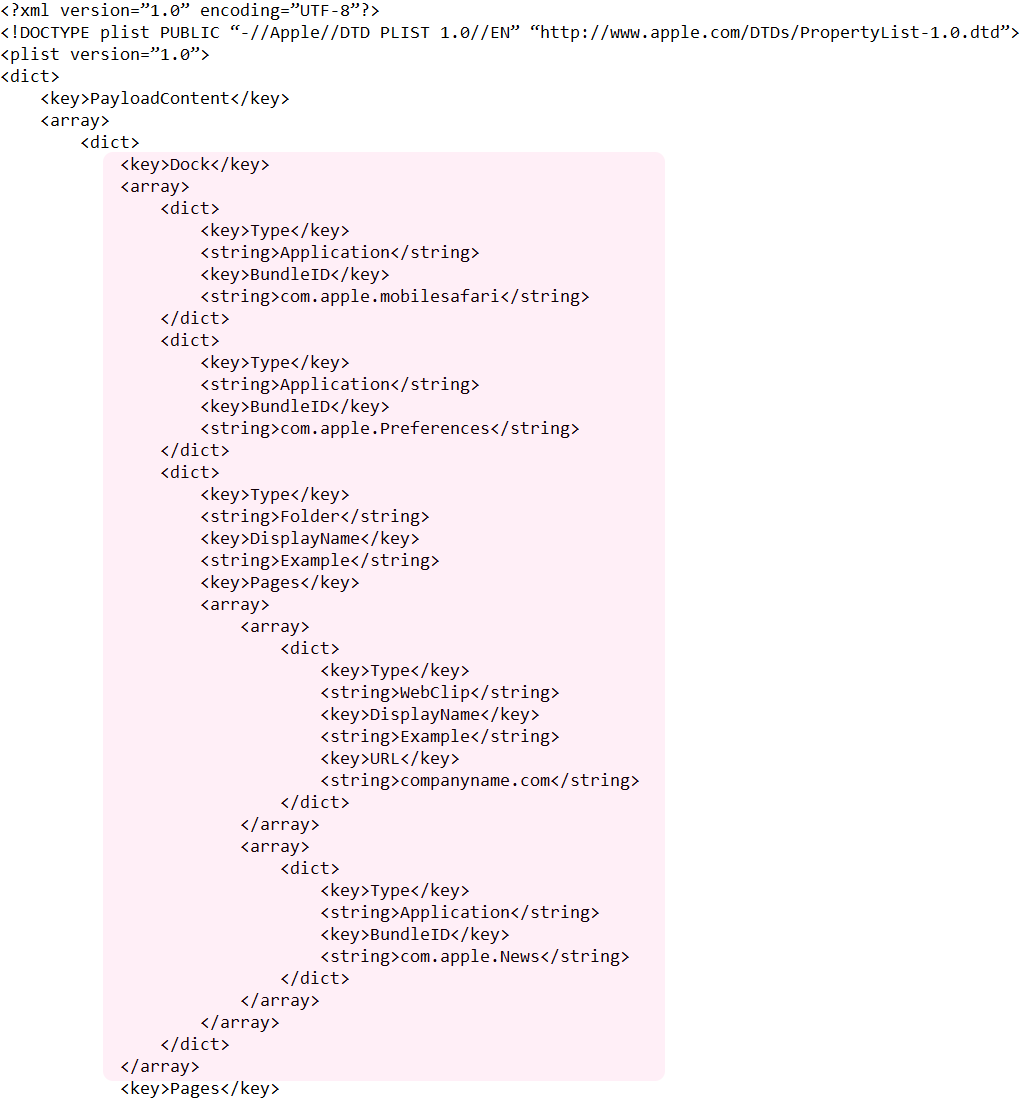
    The application is added with the values inside the <dict> element (shown in bold above). The key <BundleID> is required when the <Type> of the dock item is <Application>. The bundle ID is the unique identifier of the application, and in this case, for Outlook, the identifier is com.microsoft.Office.Outlook. For more information on item properties, see Apple's documentation.

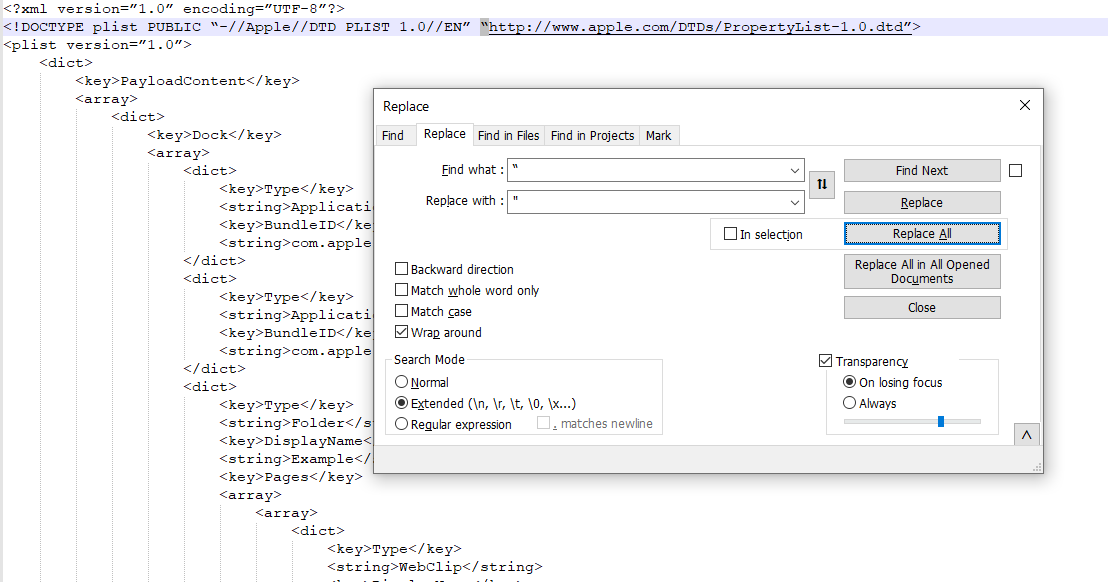
    Note: In case the payload is not accepted by Miradore, check if there are any extra spaces in it and remove them. Additionally, ensure that the payload uses straight double quotation marks where applicable.
  5. Enter a name and description for the configuration profile and select Create to finalize the profile creation.
  6. Deploy the configuration profile to the managed devices.

Results: The Microsoft Outlook application is added to the dock.

Miradore - ios home screen outlook dock 1
Microsoft Outlook app added to the dock

Creating a custom configuration profile for an empty home screen dock

Prerequisites

A configuration payload is needed to create the custom configuration profile. The payload can be created as a .mobileconfig file using any code editor and uploaded to Miradore, or you can paste the payload into the text box during the configuration profile creation. In this article, we utilize an example payload that creates an empty dock with iOS's Messages and Camera apps present on the home screen. For more information on the HomeScreenLayout payload, see Apple's documentation.

Important: For an empty home screen dock, make sure that the <key>Dock</key> line and its associated <array> block are not present in the payload.

Steps for creating the custom configuration profile

  1. In Miradore, navigate to Management > Configuration profiles and select Add.
  2. In the Add configuration profile wizard, select iOS, then select Next.
  3. Select Advanced (custom), then select Next.
  4. Upload a .mobileconfig file containing the payload by selecting Browse or paste the payload into the Custom configuration text box, then select Next.
    Example payload:

    <?xml version="1.0" encoding="UTF-8"?>
    <!DOCTYPE plist PUBLIC "-//Apple//DTD PLIST 1.0//EN" "http://www.apple.com/DTDs/PropertyList-1.0.dtd">
    <plist version="1.0">
    <dict>
        <key>PayloadContent</key>
        <array>
            <dict>
                <key>Pages</key>
                <array>
                    <array>
                        <dict>
                            <key>Type</key>
                            <string>Application</string>
                            <key>BundleID</key>
                            <string>com.apple.MobileSMS</string>
                        </dict>
                        <dict>
                            <key>Type</key>
                            <string>Application</string>
                            <key>BundleID</key>
                            <string>com.apple.camera</string>
                        </dict>
                    </array>
                </array>
                <key>PayloadIdentifier</key>
                <string>com.example.myhomescreenlayoutpayload</string>
                <key>PayloadType</key>
                <string>com.apple.homescreenlayout</string>
                <key>PayloadUUID</key>
                <string>f0b2d13e-a985-4264-9901-707feabddfcd</string>
                <key>PayloadVersion</key>
                <integer>1</integer>
            </dict>
        </array>
        <key>PayloadDisplayName</key>
        <string>Home Screen Layout</string>
        <key>PayloadIdentifier</key>
        <string>com.example.myprofile</string>
        <key>PayloadType</key>
        <string>Configuration</string>
        <key>PayloadUUID</key>
        <string>24c41ae0-f8a9-4d9f-a007-d67b0dc15af4</string>
        <key>PayloadVersion</key>
        <integer>1</integer>
    </dict>
    </plist>
    

    Note: In case the payload is not accepted by Miradore, check if there are any extra spaces in it and remove them. Additionally, ensure that the payload uses straight double quotation marks where applicable.

  5. Enter a name and description for the configuration profile and select Create to finalize the profile creation.
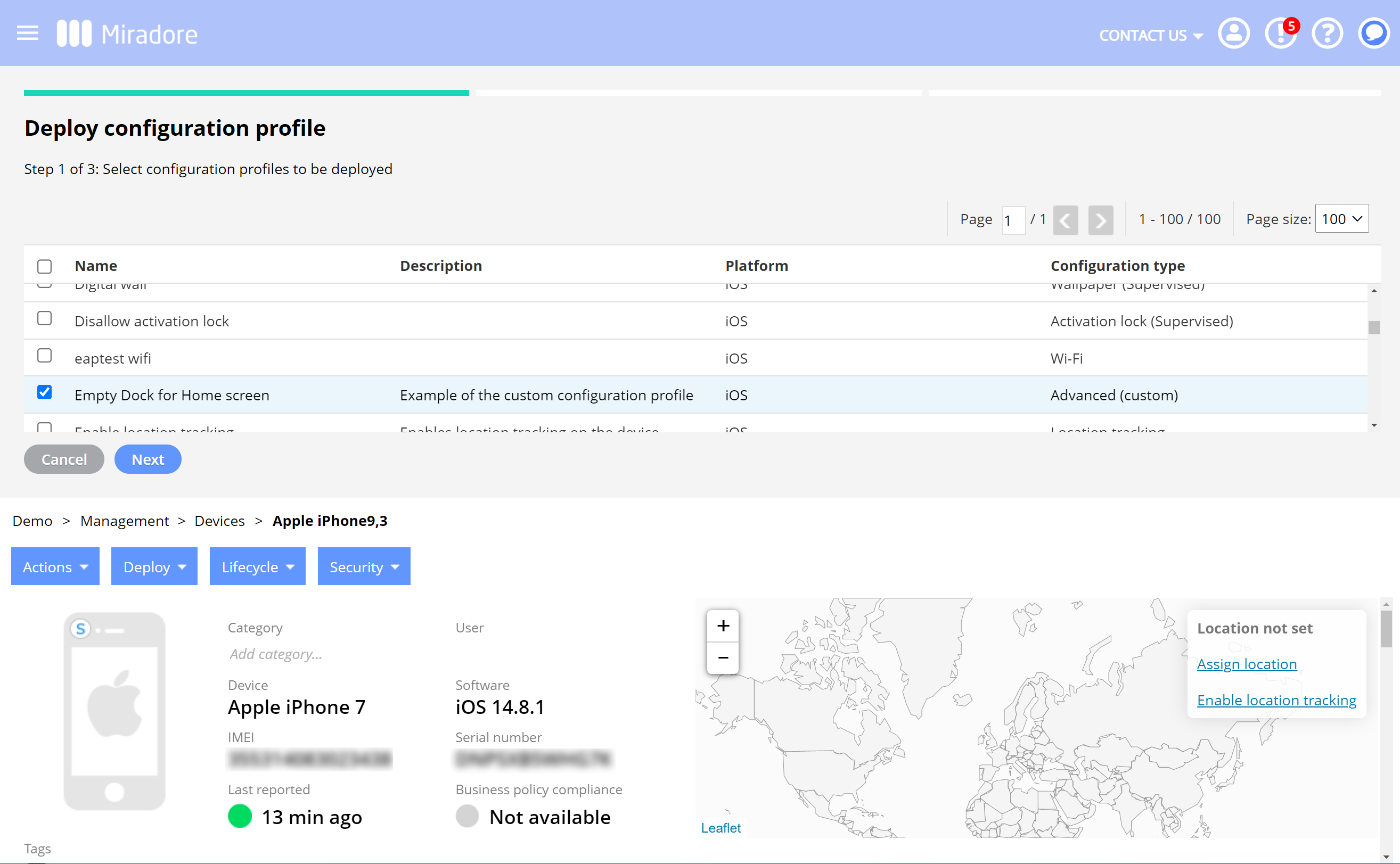
  6. Deploy the configuration profile to the managed devices.

Results: Applications are removed from the dock.

Miradore - ios home screen empty dock 1
Home screen with an empty dock


Previous Article:
«

Next Article:
»